
Traditional French Polishing & Shellac Restoration
Preserving the warm depth, clarity, and authentic patina of fine Mahogany, Walnut, and Rosewood furniture through meticulous hand finishing.
The Art of the Rubber & Shellac
Developed in France in the early 1800s, French polishing quickly became the gold standard for finishing fine European furniture. Unlike modern sprayed lacquers or synthetic polyurethane varnishes that form a plastic-like film over timber, French polishing utilizes natural shellac flakes dissolved in alcohol, built up painstakingly using a hand rubber (a core of raw wool bound inside a soft cotton rag, often called a fad).
The technique does not simply coat the wood; it forces refined shellac directly into the timber grain alongside microscopic amounts of lubricating oil and ground pumice powder. The result is an unmatched glass-like depth that enhances the natural figure and chatoyancy of fine cabinet woods without obscuring grain detail.
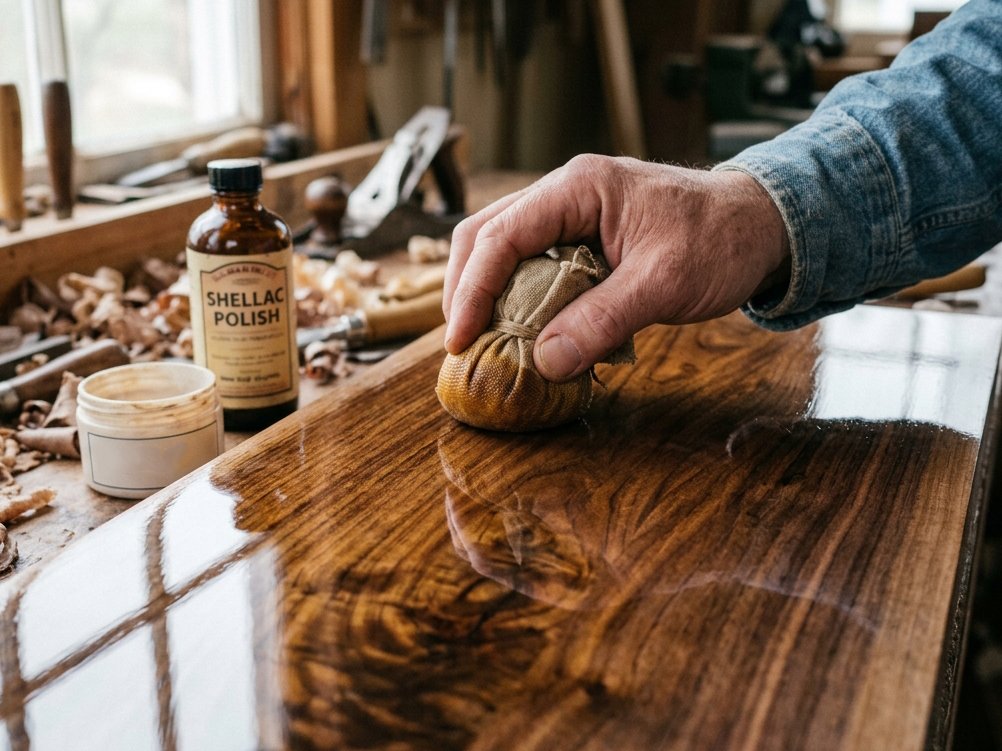
Close-up photo of a traditional polishing fad/rubber applying shellac to grain
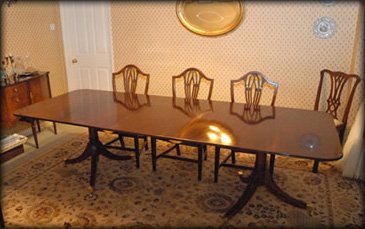
Wide shot of a fully polished 10ft Mahogany dining table surface
The Rigour of Large Dining Tables
Fremch Polishing a small tea caddy or chair leg requires finesse, but executing a flawless, streak-free French polish on a large mahogany dining table top or extendable board is one of the most demanding tests in traditional woodworking.
Because alcohol evaporates rapidly, the restorer must maintain a continuous 'wet edge' across several square meters of timber. Moving the rubber in sweeping figure-eight patterns, the craftsman must perfectly gauge fluid pressure, rubber lubrication, and atmospheric conditions in the workshop.
Apply too much pressure, and the alcohol burns through hours of prior work; apply too little, and the rubber drags, leaving ridges. Achieving a seamless, optical sheen across a ten-foot table top requires years of continuous muscle memory and trade discipline.
The Restoration Process
How we sympathetically restore your period furniture back to life.
Preparation & Grain Filling
Existing damaged polish or water rings are sympathetically neutralized. The raw grain is carefully filled using traditional pumice powder and oil to build a flat, glass-smooth base layer.
Bodying Up
Hundreds of micro-thin coats of button or garnet shellac are worked into the surface in figure-eight loops, slowly building depth, rich amber color tones, and structural body.
Spiriting Off & Burnishing
Using pure alcohol on a fresh cover, remaining trace oils are systematically drawn out of the polish. The surface is then hand-burnished to a satin, semi-gloss, or high-gloss patina according to period accuracy.
Have a Table or Period Piece Needing French Polishing?
Whether you require full table top repolishing, water mark removal, or sympathetic patina touch-ups, contact the workshop to discuss your restoration project.
Request an Estimate